

SCIENCE & EDUCATION
Your breath is one of the few ways you can consciously influence your nervous system.
Breathing happens automatically thousands of times each day, usually without us thinking about it. But unlike many processes controlled by the autonomic nervous system, breathing can also be consciously changed.
That makes the breath a powerful bridge between what happens automatically in the body and what we can intentionally influence. By slowing and regulating the breath, we can send signals to the body that help shift us away from a heightened stress response and toward a calmer physiological state. This is one reason guided breathwork plays an important role in many OpenSeed experiences.
Breathing and the Autonomic Nervous System
The autonomic nervous system helps regulate functions we don’t normally have to think about, including heart rate, blood pressure, digestion, and our physiological response to stress.
Two branches are particularly important:
The sympathetic nervous system helps prepare the body for action—the familiar “fight or flight” response.
The parasympathetic nervous system supports processes associated with rest, recovery, and restoration.
Neither system is inherently good or bad. We need both. The challenge arises when the demands of modern life keep us in a heightened state of activation without enough opportunities to recover. Our breathing patterns can influence this balance.Fast, shallow breathing often accompanies stress and arousal. Slower, more controlled breathing—particularly when the exhalation is emphasized—can help encourage a shift toward parasympathetic activity.
Why Slow Breathing Can Feel So Different
When we intentionally slow the breath, several physiological processes begin interacting. Heart rate naturally changes slightly as we inhale and exhale—a phenomenon known as respiratory sinus arrhythmia. Slow, controlled breathing can amplify this relationship between respiration and heart rate and is frequently associated with changes in heart rate variability (HRV), a measurement of the variation in time between heartbeats.
HRV has become an increasingly common tool for understanding how the body responds to stress and recovery. This helps explain why a few minutes of deliberate breathing can sometimes create a noticeable change in how we feel.
The Power of the Exhale
One of the simplest ways to influence the breathing pattern is to slow down the exhalation. When we’re stressed, breathing can become rapid and shallow without us even noticing. A deliberate, longer exhale creates the opposite pattern.
For example:
Inhale for 4 seconds.
Exhale for 6 seconds.
Repeat slowly for several cycles.
The objective isn’t to force relaxation. It’s to give the nervous system a different physiological signal.
Why Environment Matters
Knowing that breathwork is beneficial and actually practicing it during a busy day are two very different things. It’s difficult to focus on slow breathing while emails are arriving, coworkers are talking, phones are ringing, and dozens of visual cues are competing for attention. This is where the environment becomes important.
Inside OpenSeed, breathwork can be combined with:
- Guided audio
- Immersive sound
- Dynamic lighting
- Vibroacoustic stimulation
- A private physical environment
- Carefully designed nervous system reset experiences
Instead of simply telling someone to “take a few deep breaths” the environment helps create the conditions for them to actually disengage from external stimulation and follow a guided experience.
From Meditation to Nervous System Regulation
Breathwork has always been closely connected to meditation, but its usefulness extends well beyond traditional meditation practice. It can be incorporated into short recovery periods, pre-performance routines, relaxation experiences, mindfulness practices, and other approaches designed to help people transition between states of activation and recovery.
That’s an important part of how OpenSeed has evolved. Meditation remains part of the OpenSeed experience, but our broader focus is on helping people reset and regulate their nervous system through short, accessible, multi-sensory experiences. Breath is one of the most fundamental tools available to us. And perhaps the most remarkable thing about it is its simplicity: the mechanism we can use to begin changing our state is already with us every moment of the day.
Experience Breathwork Differently
OpenSeed combines guided breathwork with immersive audio, light, vibration, and a private environment designed to help people step away from stimulation and intentionally reset.
[Explore the OpenSeed Experience]

The Rise of Workplace Recovery. Why the Modern Workplace Needs More Than Wellness Perks
OpenSeed creates private, multi-sensory environments where people can step away from external stimulation and engage in short, guided experiences designed around nervous system regulation and recovery.
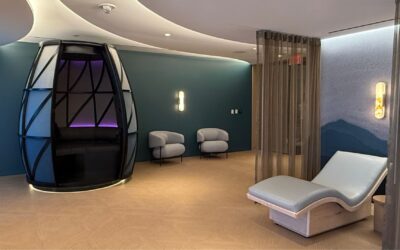
OpenSeed Brings Workplace Recovery to Hilton’s Global Headquarters
OpenSeed recently completed the installation of an Iris pod at Hilton’s global headquarters in McLean, Virginia, bringing a dedicated space for short, restorative breaks into one of the world’s most recognized hospitality companies.

Red Light Therapy, Integrated Into the OpenSeed Experience
Red Light Therapy uses specific wavelengths of red and near-infrared light and has become increasingly common across wellness, recovery, fitness, and longevity environments.
OpenSeed
Immersive wellness environments for the home + workplace.